Thursday, August 1, 2013

Apple's iPhone 5S WILL have a fingerprint scanner that could stop other people accessing the phone

The strongest indication yet that Apple's new iPhone 5S will have a fingerprint scanner has been discovered by an app developer. 
A string of code discovered in the latest beta release of Apple's iOS 7 software implies that either the iPhone 5S or iPhone 6 could come with a fingerprint scanner. 
The code describes a user touching the Home button with their thumb. A fingerprint then appears on the screen, that changes colour - presumably to signify a match - and the 'recognition is complete'.
A folder called Biometric Kit was also found.
A string of developer code discovered in the fourth beta release of Apple's iOS 7 software, pictured, gives the strongest indication to date that either the iPhone 5S or the iPhone 6 could have a fingerprint scanner
A folder called Biometric Kit, pictured, was also found and the feature could be for security reasons to unlock the phone, or to authorise payments in the App Store and prevent people from stealing your phone, reading your messages or obtaining personal data

The screenshots were tweeted by developer 
Hamza Sood.The feature could be for security reasons to unlock the phone, or to authorise payments in the App Store and prevent people from stealing your phone, reading your messages or obtaining personal data. 
Rumours about a fingerprint scanner being introduced to an upcoming Apple handset first emerged before the iPhone 5 was released in September last year. 
Apple had purchased security company AuthenTec, which analysts claimed was because Apple wanted the firm's expertise in NFC (near field communication) and biometric secutiry technologies. 
 
The iPhone 5 did not include the feature, though, and this led people to speculate that the next model - dubbed iPhone 5S - or later versions, such as iPhone 6, would include the feature. 
In April this year, rumours surfaced that the next iPhone model could be delayed because of this technology. 
A supply chain source in Taiwan told Reuters that Apple was trying to find a coating material that did not interfere with the fingerprint sensor, and this may be causing production problems. 
Then in May, PayPal's chief information security officer Michael Barrett claimed fingerprint scanners could spell the end of modern-day passwords and the technology would become more popular once Apple introduces it to one of its products. 
The developer code suggests the fingerprint scanner could be built into the phone's Home button, pictured.
The developer code suggests the fingerprint scanner could be built into the phone's Home button, pictured. A supply chain source in Taiwan told Reuters that Apple was trying to find a coating material that did not interfere with the fingerprint sensor, and this may be causing production problems
Motorola already uses fingerprint sensors on its Atrix 4G model, released in in 2011 and this feature is used in place of a password or PIN lock. 
Some laptops, including the Lenovo ThinkPad T430 comes with a fingerprint reader built-in. 
Other handsets, including Samsung's Galaxy S3 and S4, that run Android additionally have the option of enabling Face Unlock - a feature that uses facial recognition to unlock the phone.
An update to the feature recently added a 'Live' element that required a person to blink, to prove they were real and it wasn't a photo being held up to the camera. 
Commenting on the news, Andy Kemshall, co-founder and technical director at SecurEnvoy said: 'Biometric authentication is not yet near the level it needs to be for the majority of consumer facing organisations to implement it in their products. 
'Fingerprint scanning, eyeball scanning, voice and face recognition are all at least a decade away from being reliable enough to use as authentication methods. 
'Using technology already owned by the individual, rather than a body part, such as SMS authentication through mobile phones, is a more secure and cost effective method for organisations creating new products. 
'It has a 99.9 per cent reliability rate if passcodes are preloaded and is far less prone to faults so less risk of unwanted users trying to access an individual’s details.'
Motorola already uses fingerprint sensors on its Atrix 4G model, released in in 2011, pictured.
Motorola already uses fingerprint sensors on its Atrix 4G model, released in in 2011, pictured. The biometric scanner is shown on the top of the rear of the phone. This feature is used in place of a password or PIN lock
Various rumours have suggested that the new iPhone will be released on 6 September, 10 September and even October. 
The name has not been confirmed, but it has been dubbed the iPhone 5S following suit with Apple's iPhone 4 and iPhone 4S release schedule. 
Other features expected in the next Apple model include a faster A7 processor, improved Siri voice recognition, including Siri in the Car, as well as an improved camera.
A larger iPhone 6 is then expected in 2014, and Apple is also rumoured to be working on a budget model. 
This cheaper handset is expected to come in different colours and be made of plastic. It could cost as little as £63.
YouTube user DetroitBORG recently posted video that appears to be the first hands-on look at this rumoured plastic casing. 
In the video, DetroitBORG compares the current iPhone case with the plastic model. He claims it is large enough to fit on a phone with a 4-inch display.


source: dailymail

Apple’s iPad market share chopped in half as Android takes over

Apple’s iPad tablet dominance is crumbling. Strategy Analytics reported today that Apple is clinging to only 28.3 percent of the tablet market, down from 47.2 percent at the same point last year.
I guess that’s what resting on your laurels will do, Mr Cook.
In the last quarter, Apple’s iPad shipments slumped 14 percent even though the tablet market as a whole grew almost by half.
“When we add in white-box tablets, shipments reached 51.7 million units, up 43 percent from 36.1 million in Q2 2012,” Peter King, Strategy Analytics’ director of tablets said in a statement. “Apple iOS shipments were 14.6 million iPads in Q2 2013 which declined 14 percent annually.”
apple-vs-android-tablets-2012-2013
Dropping not just share but units in a rising market is a rare talent, usually reserved for failing companies. If a rising tide doesn’t lift your boat, perhaps you’ve got a hole in the hull.
But Apple’s senior leadership seems increasingly out of touch with reality.
CEO Tim Cook told analysts on Apple’s recent earnings call that iPad had majority browsing share, by far. CFO Peter Oppenheimer said that iPad was 88 percent of tablet activations in business. Both numbers are true, but the problem is that both numbers were U.S. focused, and the reality is that other countries exist, and many of them have mobile markets growing faster than the U.S.’s.
And Apple’s international sales are taking a big hit.
Smashed iPad
shannonrosa
Smashed iPad
Oppenheimer blamed Apple’s iPad disaster — 14.6 million sold, compared to projections of 17.6 million — on excess channel inventory, saying that there was a 1.9 million unit swing in terms of iPads sales recorded this most recent quarter because that many were already in the channel (in other words, already counted as sold) from last quarter.
First of all, a 1.9 million unit swing only brings Apple’s numbers up to 16.5 million units, which is still lower than expectation. And secondly, that many extra units in the channel makes one wonder if Apple was channel stuffing — a practice it continually insinuates that core competitor Samsung engages in — during the previous quarter.
The real problem was lack of innovation.
“The branded tablet market had a rest period as very few new products came to market during the quarter,” Strategy Analytics’ King also said.
Google just fixed that from the Android side four days ago. Apple, the next move is yours.
Apple’s coming products include a recently-confirmed cheaper iPhone. But maybe it’s time to start talking about cheaper iPads too.
Because Apple’s next steps will be critical for keeping iOS’ status as a leading global mobile ecosystem. Developers are already eyeing Microsoft’s Windows Phone platform as an up-and-comer.
Apple’s job is to keep it there, and also to try to win back some of the ground Android has gained on it.

source: VB

Samsung becomes the world's largest smartphone maker as Apple's market share hits a three-year low

  • Samsung reports record profits of £4.5bn - up 50 per cent from last year
  • It shipped double the amount of smartphones compared to Apple
  • This represents Samsung's biggest ever lead over Apple since 1997
  • Apple's smartphone market share drops to a three-year low
Samsung has overtaken Apple to become the world’s most profitable mobile phone company. 
Apple’s share of the smartphone market dropped to 14 per cent, its lowest for three years, because of ‘lacklustre’ iPhone 5 sales and tougher competition from rivals, according to industry analysts. 
Driven by demand for cheaper Android devices in Asia and Latin America, Samsung’s handset  division made an estimated £3.4billion operating profit in the second quarter of this year.
Samsung's president J.K. Shin, pictured, holds up the firm's Galaxy S4 phone during its launch in March.


Samsung's president J.K. Shin, pictured, holds up the firm's Galaxy S4 phone during its launch in March. Samsung has reported record profits for the second quarter of 2013 and sold more than double the handsets than Apple. Apple's market share has fallen to a three-year low

TOP 10 BESTSELLERS IN THE UK 

1. Apple iPhone 5 (16GB)   
2. Apple iPhone 4S (16GB) 
3. Samsung Galaxy S4 (16GB)   
4. Apple iPhone 4 8GB   
5. Samsung Galaxy S3 (16GB)   
6. HTC One Silver    
7. Sony Xperia Z   
8. Samsung Galaxy Ace   
9. Samsung Galaxy S2    
10. Samsung Galaxy S3 Mini
Source: uSwitch as of July 1 2013
The South Korea-based electronics giant, also the world’s biggest TV company, made 27.7 per cent of all phones sold during the quarter.
Apple’s iPhone was said to be ‘underperforming’ with an estimated operating profit of £3billion according to research firm Strategy Analytics.
In the past, while selling fewer phones, the more expensive iPhone has kept Apple’s profits ahead of competitors’. 
But with no new products to do battle with Samsung’s latest, the Galaxy S4, Apple finally lost its crown.
Neil Shah, of Strategy Analytics, said: ‘With strong volumes, high wholesale prices and tight cost controls, Samsung has finally succeeded in becoming the handset industry’s largest and most profitable vendor.’
Experts say Apple could overtake Samsung again when it launches its next iPhone model.
Samsung shipped 2.4 times more phones around the world than Apple in the second quarter of 2013.
Apple released its most recent handset, the iPhone 5, pictured, in September 2012 whereas Samsung released its flagship Galaxy S4 in March this year.


Apple released its most recent handset, the iPhone 5, pictured, in September 2012 whereas Samsung released its flagship Galaxy S4 in March. Since then the Korean firm has also released the Samsung Galaxy S4 Mini in May - both which would have contributed to the company's lead
Budget smartphone maker ZTE, which makes the PF200, pictured, is now world's fourth largest manufacturer for the first time ever


Budget smartphone maker ZTE, which makes the PF200, pictured, is now the world's fourth largest manufacturer for the first time ever
Both companies storm ahead of other phone makers, including LG, Lenovo and ZTE which had 5.1 per cent share, 4.7 per cent and 4.2 per cent respectively. 
This is the first time ever that ZTE has taken the fourth spot. 
Lenovo pushed Huawei from the list. 
However, some analysts claim this might be because Apple is gearing up for a new release so is experiencing a natural decline.  
Apple released its most recent handset, the iPhone 5, in September 2012 whereas Samsung released its flagship Galaxy S4 in March this year. 
Since that time, the Korean firm has also released the Samsung Galaxy S4 Mini in May - both which would have contributed to this rise. 
Apple is rumoured to be working on an iPhone 5S, due to launch in September, as well as a cheaper, plastic model dubbed iPhone Lite. 
Figures from uSwitch.com's Mobile Tracker for July found that Apple handsets are still among the bestselling smartphones in the UK. 
Apple's iPhone 5 topped the list, followed by the 4S model. 
Samsung's Galaxy S4 is the bestselling Android device while Apple's iPhone 4 is in fourth place and Samsung's other Galaxy handsets occupy fifth, eight, ninth and tenth place. 
The HTC One Silver and Sony's Xperia Z complete the top ten in sixth and seventh respectively.
Other figures from Strategy Analystics found that global smartphone shipments grew 47 per cent annually from 156.5 million units in the second quarter of 2012 to 229.6 million in Q2 2013. 
This was the largest volume of smartphones ever shipped in a single quarter. 
Smartphones accounted for 59 per cent of all mobile phones shipped globally and the growth is being driven by surging demand for 4G models in developed regions like the U.S and 3G models in emerging markets such as India.
Smartphone shipment figures from IDC


source: dailymail

Wednesday, July 24, 2013

Smartphone manufacturers told to introduce 'kill switch'

Manufacturers of smartphones are being asked to incorporate “kill switch” technology in their mobiles to tackle a rise in thefts.

Smartphone manufacturers told to introduce 'kill switch'

Boris Johnson, the Mayor of London, has told firms that it should be possible to make stolen handsets “inoperable” to prevent them being used or sold once taken.
In a letter to eight companies, including Apple, Samsung and Google, he said manufacturers had a “corporate responsibility” to help tackle thefts,the Financial Times reported.
The mayor’s intervention formed part of a coordinated attempt between senior politicians in London, New York and San Francisco to apply pressure on mobile phone companies.
While overall crime in Britain and the US is falling, pickpocketing and snatch thefts continue to rise because of the attraction of high value, portable belongings such as smartphones and tablet computers.
Figures released last week showed that such thefts had gone up 9 per cent in Britain since last year. About 10,000 handsets are stolen every month in London.
Mr Johnson told manufacturers: “If we are to deter theft and help prevent crimes that victimise your customers and the residents and visitors to our city, we need meaningful engagement from business and a clear demonstration that your company is serious about your corporate responsibility to help solve this problem.”
He added: “Each of your companies promote the security of your devices, their software and information they hold, but we expect the same effort to go into hardware security so that we can make a stolen handset inoperable and so eliminate the illicit second-hand market in these products.
“We hope you would support this objective. Customers and shareholders surely deserve to know that business cannot and must not benefit directly from smartphone theft through sales of replacement devices.”
Mobile phone theft was discussed at an international policing conference convened by Mr Johnson earlier this month and his officials met counterparts in New York last week for further talks.
Anti-theft measures offered by Apple and Samsung were tested last week by US security experts as prosecutors called for a universal “kill switch” – a method of shutting down or disabling a stolen device.

Source: Telegraph

Thursday, July 18, 2013

Massive Tumblr Security Flaw Requires Everyone On iPhone, iPad To Change Their Password

Tumblr has asked all users of its app on iPhone and iPad to change their password and download an update of the social blogging software in order to cure a security flaw. The news came in a very brief blog post by the company that did not explain the extent of the security breach.
Tumblr did say in a footnote that passwords could be "'Sniffed' in transit on certain versions of the app."
The flaw was reportedly discovered by a reader of The Register, who had been asked to screen apps for his corporate employer. The unnamed employee tested popular apps on the company's wifi network, and found that password logins were being transmitted in a plain-text, non-encrypted way — and therefore were entirely visible to anyone clever enough who wanted to see them.
The Register claims Tumblr was slow to resolve the problem:
Our source only came to El Reg with the issue after failing to get it resolved by simply reporting it to Tumblr's support team.
Here's a screengrab of the flaw in action.
Below, the full text of Tumblr's warning to its users:
Important security update for iPhone/iPad users
We have just released a very important security update for our iPhone and iPad apps addressing an issue that allowed passwords to be compromised in certain circumstances¹. Please download the update now.

If you’ve been using these apps, you should also update your password on Tumblr and anywhere else you may have been using the same password. It’s also good practice to use different passwords across different services by using an app like 1Password or LastPass.

Please know that we take your security very seriously and are tremendously sorry for this lapse and inconvenience.


Read more: http://www.businessinsider.com/tumblr-security-flaw-requires-password-change-2013-7#ixzz2ZPzWfzFy

Tuesday, July 16, 2013

Which?: iPhone 5 is 'slowest smartphone'

Tests of the seven most popular smartphones found that iPhone 5 came last, processing requests at half the speed of the Samsung Galaxy S4.

iPhone 5 is slowest smartphone
The iPhone 5 came last for speed in a test of seven popular smartphones. Photo: Getty
The phones were put through a series of benchmark tests by Which? to measure processor and memory performance, which show how quickly the phone will allow photo editing, running graphic-intensive games, and using several apps at once.
Samsung Galaxy S4, the fastest phone of those tested, has a 1.9GHz quad-core processor which helped generate its impressive score. The phone received a mark of 3188 on the industry recognised test, compared to Apple iPhone 5's 1664 score.
Which? consumer watchdog said: “We put all the handsets through the same tests. Undoubtedly, Apple will upgrade its next iPhone when it launches this autumn.
"For the moment, Samsung’s Galaxy S4 is the phone to beat when it comes to speed."
The second fastest phone was ranked as HTC One, which has a quad-core 1.7-inch processor and 2GB Ram.
Which? said the phone "will provide plenty of punch for phone owners who use Gmail, Facebook, Instagram and Angry Birds all at the same time."
Sony's Xperia Z came in a close third, followed by Google's Nexus 4 which had just 39 fewer points. But the fourth place phone is more than £200 cheaper than any of those in the top three.
The final phones to complete the set were Samsung's Galaxy Note 2 and the BlackBerry Z10, which came in fifth and sixth respectively.

Source: Telegraph

Monday, June 17, 2013

Android 5.0 “Key Lime Pie” UI Concepts Hitting the Web, Give Us Very High Hopes

Android KLP
As we approach the rumored date for Android 4.3′s launch on June 20 (at least, that’s what our sources say), many have already come to the realization that we should not expect Google to introduce a new interface for the OS. It will still be called Jelly Bean and nothing too crazy will happen. What most in the business have their money on is that we can expect to see Google change up Android’s look in the iteration after next, being Android 5.0 “Key Lime Pie.” That’s when we will see some new colors, icons, wallpapers, etc. take place. 
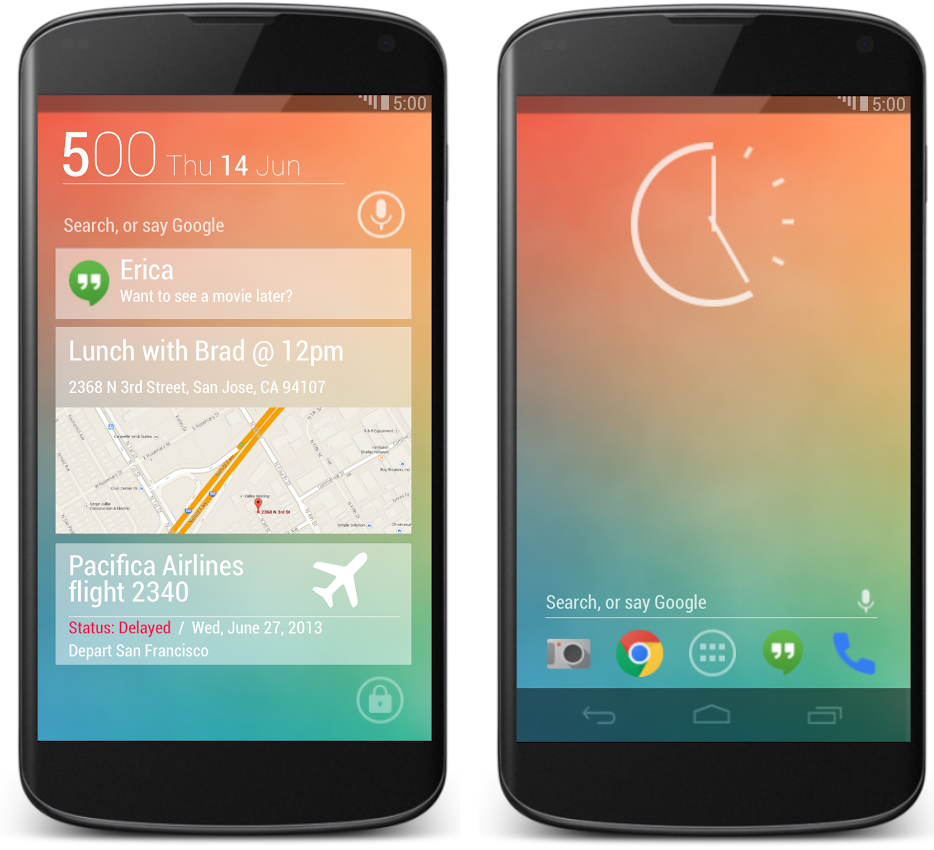
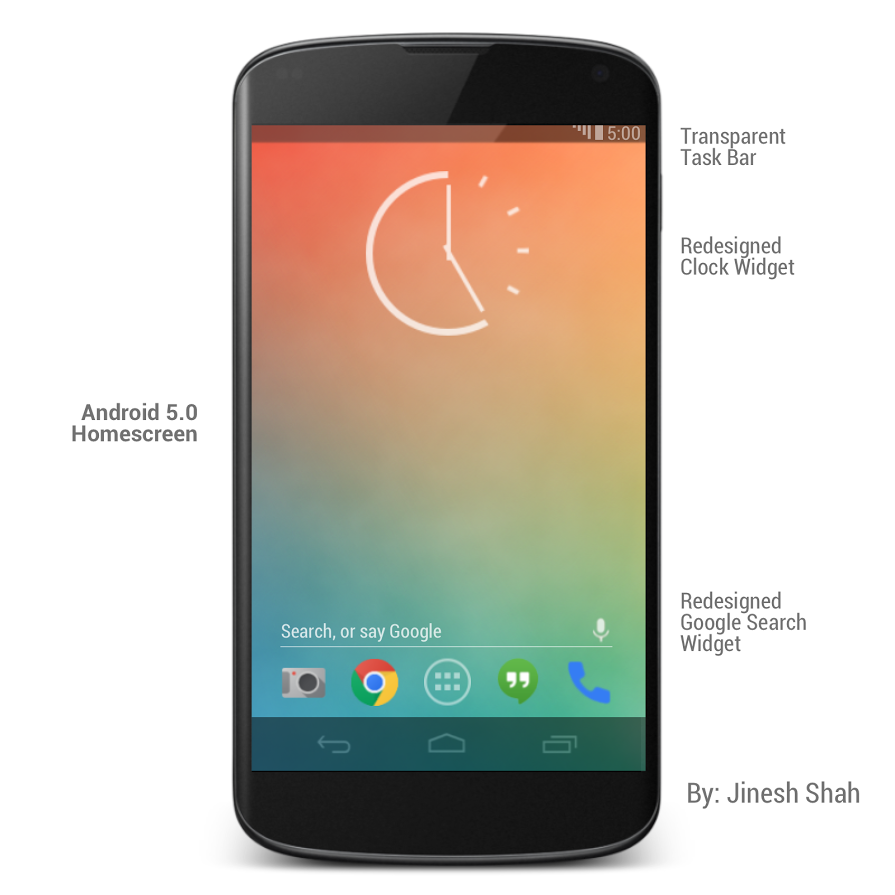
Graphic designers appear to be already creating their very own concepts for what they would like to see in Android 5.0, playing more with lockscreen widgets and revising the Android homescreen look. Artist Jinesh Shahtook to his Google+ page recently to post up a few pictures of his own ideas, some of which we have become big fans of. While it comes off as minimal and clean, there is enough information on any given homescreen and the lockscreen to give off the sense that this concept would be highly functional and practical for users.
The lockscreen widget shows a comprehensive look at this user’s upcoming meeting, even showing a map preview of its location. Below that, we can see upcoming flight details, all of which would be able to be customized under new settings that would come with KLP. As for the homescreen changes, what sets this concept apart from others is the idea of “hidden” widgets. With swipes and other gestures, you could reveal other widgets that don’t necessarily have to be on your homescreen when not being used. It’s a fantastic concept, one that we probably wouldn’t mind seeing implemented.
Android 5.0 Music WidgetAndroid 5.0 Music Widget Closed
Android 5.0 HomescreenAndroid 5.0 Lockscreen

Source: Droid-life